
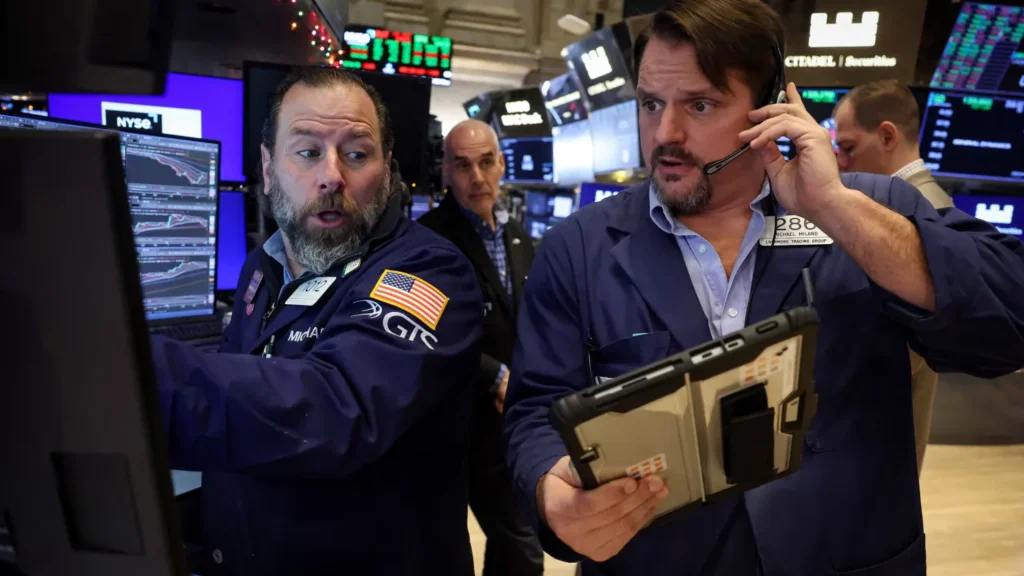
US stocks moved decidedly lower in the first full session of trading since the Martin Luther King Jr. holiday, with investors turning nervous over new tariff threats from President Donald Trump linked to his effort to purchase Greenland. The S&P 500, Dow and Nasdaq all relinquished earlier gains, with the Nasdaq leading the tech-heavy slide, along with the large-cap “mega” tech names.
Safe-haven assets boomed with the equity selloff. Gold and silver made new record highs as traders rotated out of risk assets; gold traded near multi-thousand-dollar levels as the greenback weakened and bond yields rose higher. Volatility spiked to fresh multiweek highs: the CBOE VIX surged as market participants reassessed geopolitical and policy risk.
Big tech bore much of the pain. The “Magnificent Seven” group of megacaps—including Nvidia, Apple, Alphabet, Amazon, Meta, Microsoft and Tesla – fell broadly, each down roughly 1-3% apiece in early trading as investors locked in profits and pared exposure to growth names amid heightening uncertainty. Chip and semiconductor stocks mixed after earnings and guidance from sector bellwethers.
The company-specific news and earnings amplified the market move. Industrial stalwart 3M plummeted after slashing full-year profit guidance, and Fastenal missed revenue expectations, moves adding to downside pressure on the Dow and the industrial complex. Netflix and other media names were in focus as major earnings get set to hit this week.
Macro and calendar context matters: markets opened a busy week shadowed by an unusually high political risk backdrop and a packed economic/earnings calendar. Traders highlighted a stack of Fed-sensitive reports and a slate of corporate results that could either calm or exacerbate volatility later in the week. Treasury yields ticked up on renewed selling, reflecting repositioning between equities, bonds, and safe havens.
What drove the move – short version: President Trump posted plans for stepped tariffs on a group of European countries tied to Greenland negotiations, reviving trade-war fears and prompting a global risk-off reaction. Markets – which had been relatively calm heading into the holiday weekend – quickly priced in one more layer of geopolitical uncertainty. Analysts quoted in the coverage said the tariffs look intended as a negotiating tool but acknowledged markets rarely like surprise escalation.